Why Local Business Listings Matter More Than Ever

Why Local Business Listings Matter More Than Ever

Local Business Listings: Your Secret Weapon for Getting Found

If you’ve ever wondered how customers magically “discover” certain businesses online, here’s the secret: local business listings. They’re the digital version of being on Main Street—except way more powerful.

What They Are (and Why You Should Care)

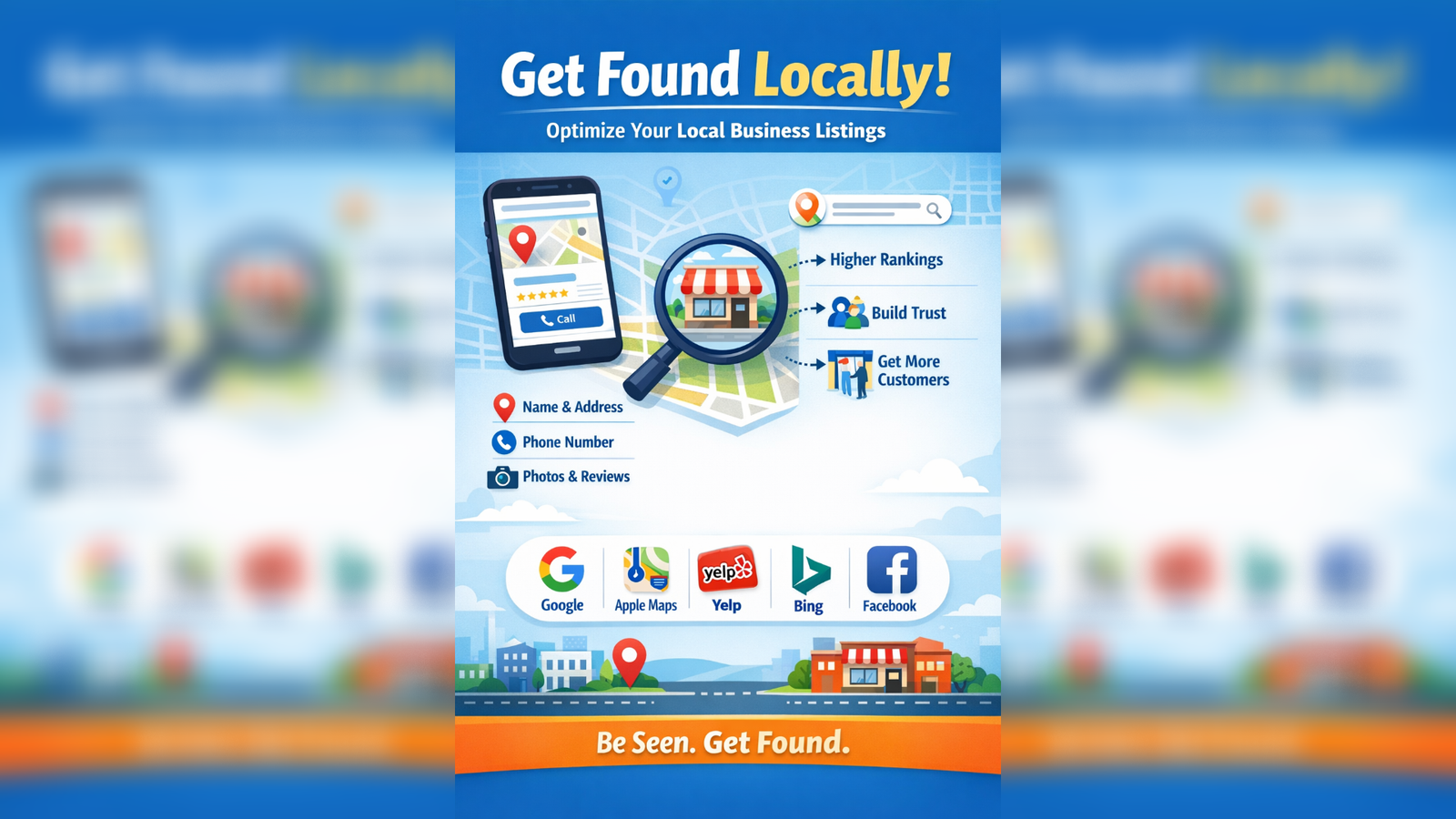
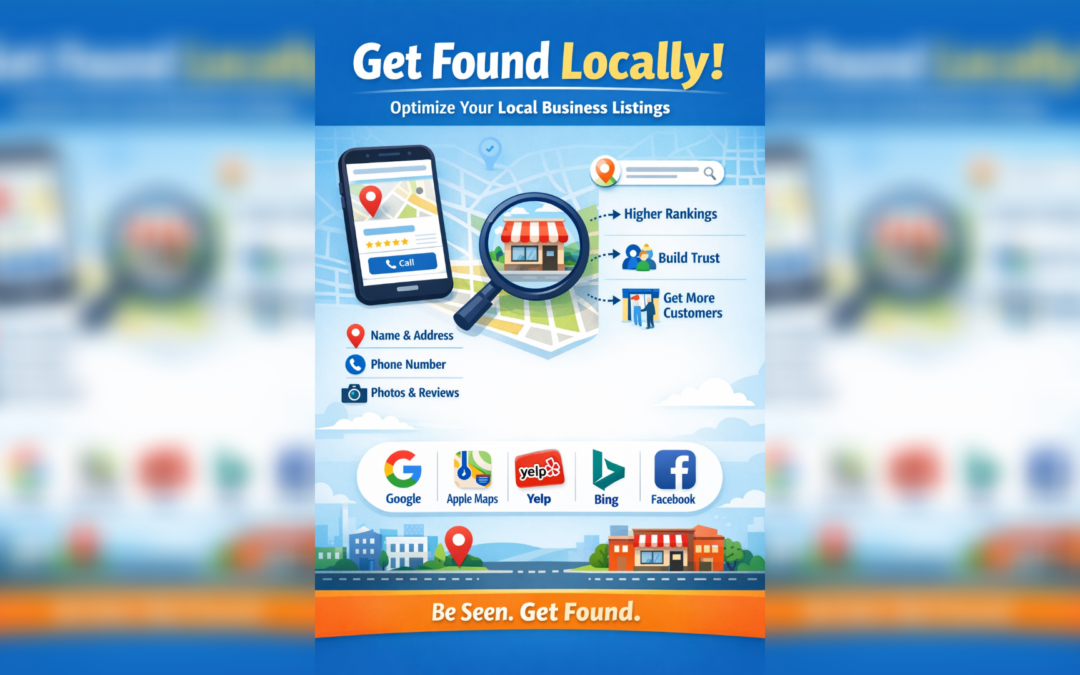
Local business listings are online profiles that tell people who you are, where you are, and how to reach you. Think of them as your business’s online ID card. When someone searches “coffee near me” or “best plumber in town,” these listings help decide who shows up.

Why They Matter

People trust what they can see. A complete listing with photos, reviews, and updated hours makes your business feel real and reliable. A missing or outdated listing? That’s like having a storefront with the lights off.

The Platforms That Matter Most

You don’t need to be everywhere—just in the right places:

  • Google Business Profile (the big one)

  • Apple Maps

  • Yelp

  • Facebook

  • Bing Places

If you’re in a niche industry, there are specialized directories too.

How to Make Your Listing Shine

  • Add great photos

  • Keep your hours accurate

  • Write a friendly, clear description

  • Encourage happy customers to leave reviews

  • Respond to reviews so people know you’re active

The Payoff

More visibility. More trust. More customers walking through your door or calling your number. Local business listings work quietly in the background, but their impact is huge.

Why “AI-Driven Personalization & Automation” Is Trending

Why “AI-Driven Personalization & Automation” Is Trending

Trending Marketing Topics (with Data) for Google + Facebook Marketers in 2025

Here are some of the biggest, evidence-based trends shaping digital marketing right now — backed by recent reports and industry data.

1. AI-Powered Personalization & Predictive Analytics

  • According to Adobe’s 2025 Digital Trends Report, 65% of senior execs say AI + predictive analytics will be a core driver of growth.

  • Generative AI in digital marketing is projected to grow massively — one market report estimates it will go from $2.48B in 2024 to $35.12B by 2034.

  • Many companies (per the IntelligenceBank Content Marketing Trends Report) are using AI for content ideation, real-time personalization, and workflow automation.

Why it matters:

  • On Google, AI + predictive analytics helps you serve more relevant search ads and content.

  • On Facebook / Meta, AI helps optimize ad creative, audience targeting, and dynamic personalization in real time.

How to use it:

  • Use AI tools for personalized content (emails, landing pages, ads)

  • Leverage predictive analytics to forecast customer behavior and tailor campaigns

  • Test generative AI for ad creative + copy, but always A/B test

2. Search Experience Optimization (SXO) / Generative Engine Optimization (GEO)

  • According to several sources, Google’s AI-powered “overviews” are reshaping how people interact with search results.

  • Semrush’s 2025 trends highlight that AI is shifting SEO from pure keyword focus to contextual experience and intent.

  • There’s also growing talk of “Generative Engine Optimization” (GEO) — optimizing content so it’s more likely to be used / cited by AI-powered search/chat systems.

Why it matters:

  • With Google, more searches could be answered directly by AI or “search summary” features.

  • On Meta, SEO-style content that is optimized for AI (GEO) can help attract more organic and referral traffic.

How to use it:

  • Structure content for featured snippets, FAQ, and AI citation (clear, authoritative)

  • Create content designed to answer user intent, not just target keywords

  • Use schema, structured data, and other SEO best practices to help AI systems understand your content

3. First-Party Data & Privacy-First Marketing

  • According to a Q1 2025 industry update, 82% of marketers are prioritizing first-party data collection.

  • With the decline of third-party cookies and stricter privacy rules, first-party data (customer data collected directly) has become more valuable.

  • AI + predictive analytics, when combined with first-party data, can deliver hyper-personalized experiences.

Why it matters:

  • On Google Ads, you can use first-party data to build more accurate audiences, retarget, and optimize.

  • On Facebook, first-party data (like email lists, CRM data) can feed into custom audiences, lookalikes, and (with AI) more precise ad targeting.

How to use it:

  • Build and enrich your first-party data: email lists, CRM, website interactions

  • Use that data to create tailored ad audiences

  • Leverage privacy-first strategies (transparency, consent, data ethics) in your marketing

4. Voice, Image & Multimodal Search

  • Voice search continues to matter: as more people use voice assistants, brands need to optimize for conversational queries.

  • Search is becoming more multimodal: text + image + voice queries are all important.

  • B2B e-commerce trends report (Algolia) also suggest that AI-powered site search and discovery (leveraging multimodal inputs) is a big focus.

Why it matters:

  • On Google, optimizing for voice and visual search can help your content surface in new ways

  • On Facebook / Instagram, multimodal content (images, video, interactive formats) resonates more — especially when paired with AI-driven personalization

How to use it:

  • Create content using conversational, question-based keywords

  • Optimize pages for visual search (alt text, structured data)

  • Use short-form, interactive, and visual content in your ads and organic social strategy

5. AI Ethics, Explainability & Responsible Use

  • As marketers use more AI, there’s growing scrutiny around transparency and ethics: how AI decisions are made, how data is used, and how content is generated. This is showing up in many “AI in marketing” trend reports.

  • According to HumansWith.ai, the cost-saving benefits of AI are huge but marketers are also focusing on brand trust, authenticity, and governance.

Why it matters:

  • On Google, how you use AI in content and ads can influence brand reputation + compliance.

  • On Facebook, users are sensitive to inauthentic or overly automated content — balancing AI automation with real human touch will be key.

How to use it:

  • Be transparent when using AI-generated content (e.g., disclose in content if appropriate)

  • Use AI tools that provide “explainable” outputs when possible

  • Combine AI efficiency with human storytelling and oversight

Visualizing the Trend Growth (Hypothetical / Data-Backed)

Here’s a simple projected trend growth model (based on industry reports and forecasts):

TrendEstimated 2025 ImpactGrowth Signal
AI Personalization & Predictive AnalyticsHigh – major budget shiftAdobe report: 65% execs prioritizing Adobe Business
Generative / GEO Search OptimizationVery high – new SEO paradigmSemrush + academic research Semrush
First-Party Data & Privacy-First MarketingMedium–HighIndustry sources showing widespread prioritization Kreativa Inc
Voice / Multimodal SearchMediumMultiple sources call it “next search frontier” LinkedIn
AI Ethics & Responsible UseGrowing concern + priorityExperts emphasizing AI governance HumansWithAI

Why These Trends Matter for Facebook + Google Marketers

  • Budget Efficiency: AI + predictive analytics help you get more ROI from ad spend on both Google and Meta.

  • Audience Targeting: First-party data + AI = smarter lookalikes, better retargeting.

  • Content Strategy: GEO / AI-optimized content helps you rank for conversational / AI-driven search.

  • User Experience: More personalized interactions build loyalty and trust.

  • Brand Trust: Using AI responsibly builds credibility with your audience.

Copyright © 2025 Sayward Marketing | Proudly Canadian Eh! Canadian Flag