9 Proven Steps To Maximize The Effectiveness of Your Google Business Listing

9 Proven Steps To Maximize The Effectiveness of Your Google Business Listing

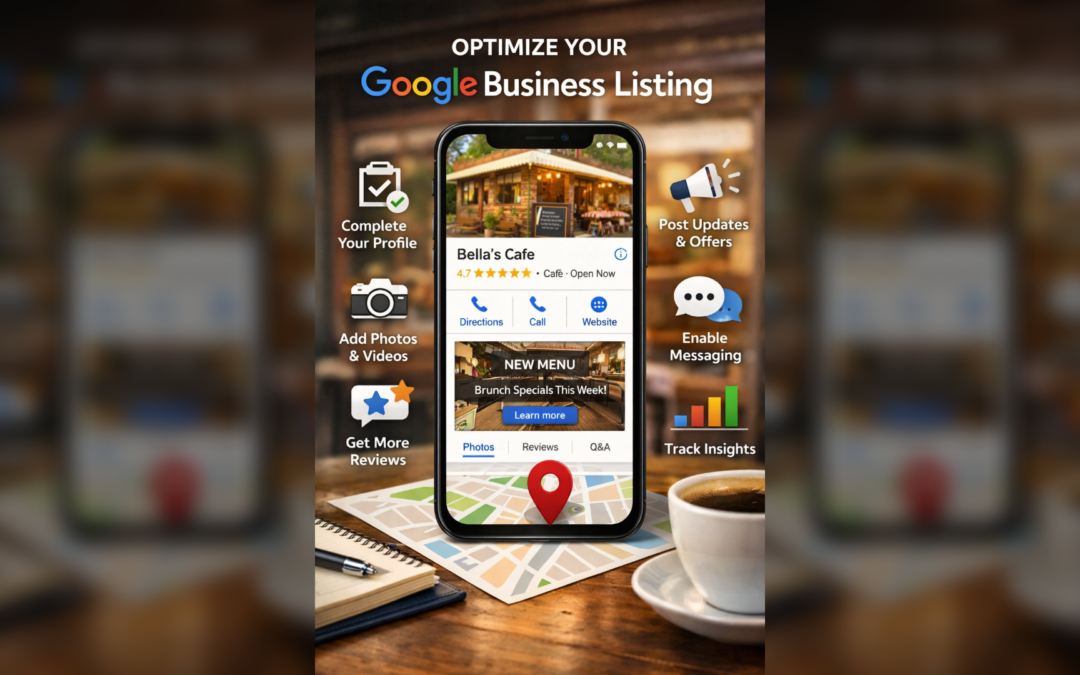
Strategies to Maximize the Effectiveness of Your Google Business Listing

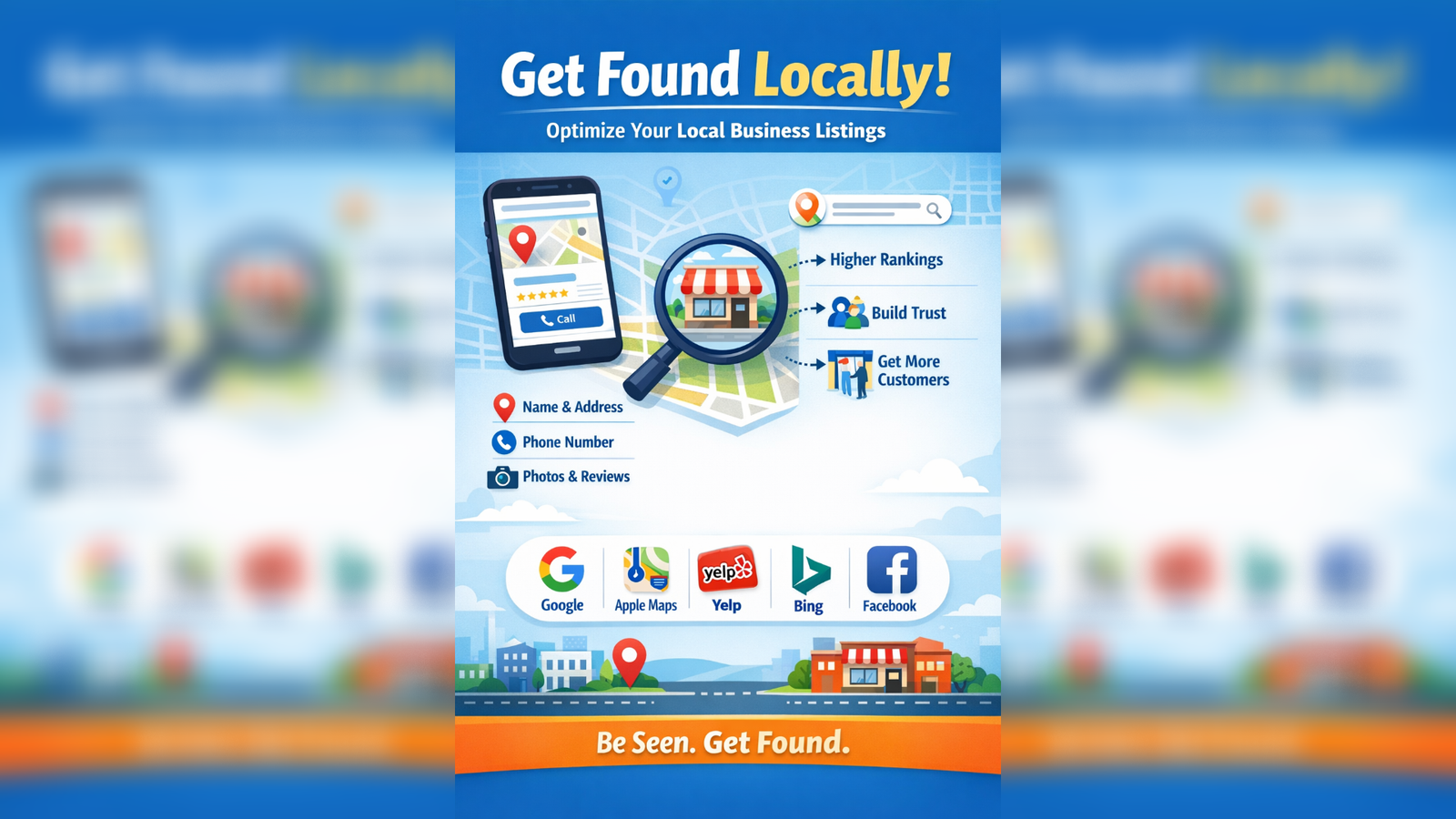
A well‑optimized Google Business Listing is one of the most powerful tools for attracting local customers. When people search for services “near me,” your profile is often the first thing they see. A strong listing boosts visibility, builds trust, and drives real‑world actions such as phone calls, website visits, and in‑store traffic.

Below are proven strategies to help your business stand out in local search results and get the most from your Google Business Listing.

1. Complete Every Section of Your Profile

Many businesses leave important fields blank, which limits visibility. Google rewards listings that are complete, accurate, and detailed.

Be sure to fill out:

  • Business name

  • Address

  • Phone number

  • Website

  • Hours of operation

  • Service areas

  • Business categories

  • Attributes (e.g., accessibility, amenities)

Your name, address, and phone number should match exactly across your website and all online directories.

2. Select the Right Primary and Secondary Categories

Your categories tell Google what your business does. The primary category is especially important because it directly influences which searches trigger your listing.

Choose the most specific primary category available, then add secondary categories to cover additional services. For example, a dental clinic might choose “Dentist” as the primary category and add “Cosmetic Dentist” or “Dental Implants Provider” as secondary options.

3. Add High‑Quality Photos and Videos

Listings with strong visuals consistently earn more clicks and engagement. Photos and videos help customers understand what to expect and build confidence in your business.

Include:

  • Exterior photos

  • Interior photos

  • Product or service images

  • Team photos

  • Short videos showcasing your business

Regularly updating visuals signals that your business is active and well‑maintained.

4. Encourage and Respond to Customer Reviews

Reviews heavily influence both local rankings and customer decisions.

Encourage happy customers to leave feedback by:

  • Asking after a positive interaction

  • Sending follow‑up emails with a review link

  • Displaying a review QR code in your location

Responding to reviews—positive or negative—shows that you value customer input and care about customer experience.

5. Post Regular Updates

The “Posts” feature is a powerful way to keep your listing fresh and engaging.

Use posts to highlight:

  • Promotions and special offers

  • New products or services

  • Company news

  • Events

  • Helpful tips or insights

Consistent posting keeps your business visible and encourages repeat engagement.

6. Use the Q&A Section Proactively

Instead of waiting for customers to ask questions, add common ones yourself and provide clear answers.

Examples include:

  • Parking information

  • Appointment requirements

  • Pricing ranges

  • Policies and procedures

This helps customers get the information they need quickly and reduces friction.

7. Enable Messaging and Booking Tools

If available, enable messaging so customers can contact you instantly. Quick replies often lead to higher conversion rates.

If your business accepts appointments, integrate booking tools to streamline the process and reduce steps between discovery and action.

8. Monitor Insights and Performance

Google provides valuable analytics that show how people interact with your listing. Track metrics such as:

  • Search queries

  • Calls

  • Direction requests

  • Website clicks

  • Photo views

These insights help you understand customer behavior and refine your strategy.

9. Keep Your Information Updated

Your listing should always reflect your current operations. Update it promptly when anything changes, including:

  • Holiday or seasonal hours

  • New services

  • Address or phone number changes

  • Temporary closures

Accurate information prevents customer frustration and protects your reputation.

Final Thoughts

Your Google Business Listing is more than a digital directory entry—it’s a powerful local marketing asset. By optimizing every section, engaging with customers, and keeping your profile active, you can significantly increase your visibility and attract more local customers.

Businesses that treat their listing as an ongoing marketing channel—not a one‑time setup—see the strongest long‑term results.


Need Help?

8 Steps You Can Take to Sell More Digital Products

8 Steps You Can Take to Sell More Digital Products

Selling digital products—like courses, templates, ebooks, software, or memberships—offers huge upside: low overhead, global reach, and scalable revenue. But competition is fierce, and simply having a great product isn’t enough.

To increase sales, you need clarity, trust, and smart distribution. Here are 8 practical steps you can take to sell more digital products consistently.

1. Get Extremely Clear on the Problem You Solve

People don’t buy digital products—they buy solutions.

Ask yourself:

  • What exact problem does my product solve?
  • Who is it specifically for?
  • What outcome will they get?

The clearer your positioning, the easier it is for customers to say, “this is for me.”

2. Improve Your Product Page Copy

Your product page should answer three questions quickly:

  • What is this?
  • Who is it for?
  • Why should I trust you?

Focus on benefits over features, use simple language, and include clear headlines, bullet points, screenshots or previews, and a strong call to action.

3. Add Social Proof Wherever Possible

Trust is a major buying factor for digital products.

Add testimonials, case studies, user results, and screenshots of feedback or reviews. Even a few honest testimonials can significantly boost conversions.

4. Offer a Low-Risk Entry Point

Reduce purchase anxiety by offering a money-back guarantee, a free preview or demo, or a low-cost starter version. When buyers feel safe, they’re far more likely to take action.

5. Build an Email List (and Use It)

Email remains one of the highest-converting sales channels.

Use lead magnets like free guides, checklists, mini-courses, or templates. Then nurture your list with helpful content before pitching your product. Warm audiences convert better than cold traffic.

6. Create Content That Educates and Pre-Sells

Use content to demonstrate your expertise and naturally lead to your product.

Effective formats include blog posts, YouTube videos, social media threads, and webinars or live sessions. Teach part of the solution for free, then position your product as the fastest or most complete path forward.

7. Add Urgency and Scarcity (Ethically)

People delay decisions unless there’s a reason to act now.

Examples include limited-time bonuses, launch-only pricing, enrollment deadlines, or seasonal promotions. Urgency should feel real, not manipulative.

8. Track, Test, and Optimize One Thing at a Time

Small improvements add up.

Track metrics like page conversion rates, email open and click rates, and traffic sources. Then test headlines, pricing, calls to action, and page layouts. Continuous optimization often beats constant product creation.

Final Thoughts

Selling more digital products isn’t about hype—it’s about clarity, trust, and consistency. When you clearly communicate value, reduce risk, and show real results, sales follow.

Focus on improving one step at a time, and your digital product revenue can grow steadily and sustainably.

Need Help?

13 Concrete Actions Local Businesses Can Take to Boost Customer Count

13 Concrete Actions Local Businesses Can Take to Boost Customer Count

For local businesses, growth isn’t about chasing viral fame—it’s about showing up consistently for the people who live, work, and shop nearby. Whether you run a café, salon, retail shop, or service business, there are practical, proven steps you can take to attract more customers and keep them coming back.

Here are 13 concrete actions you can start implementing today to increase your customer count.

1. Optimize Your Google Business Profile

Make sure your business listing is complete and accurate:

  • Correct address, hours, and phone number

  • High-quality photos of your space, products, and team

  • Regular updates and posts

This alone can dramatically increase visibility in local searches.

2. Actively Ask for Reviews (and Respond to Them)

Positive reviews build trust fast. Ask happy customers for reviews via:

  • In-store signage

  • Follow-up texts or emails

  • Receipts or QR codes

Always respond—thank positive reviewers and professionally address negative feedback.

3. Improve Your Storefront and First Impression

Your exterior is your silent salesperson. Clean windows, clear signage, good lighting, and an inviting entrance can significantly increase walk-ins.

Ask yourself: Would I walk into this place if I passed by for the first time?

4. Create a Simple Referral Program

Encourage word-of-mouth with incentives:

  • “Refer a friend, get 10% off”

  • “Bring a friend, both get a free upgrade”

Keep it simple and easy to explain.

5. Partner with Nearby Businesses

Collaborate instead of competing:

  • Cross-promotions

  • Shared events

  • Discount swaps

Example: a gym partners with a smoothie shop, or a bookstore partners with a café.

6. Host Small, Local Events

Events give people a reason to visit now:

  • Product launches

  • Workshops or demos

  • Community meetups

Even a small gathering of 10–20 people can create buzz and repeat visits.

7. Use Social Media to Highlight Real Customers

People trust people. Post:

  • Customer stories or testimonials

  • User-generated content

  • Before-and-after results

Tag customers (with permission) to expand reach locally.

8. Offer a Limited-Time Local Deal

Urgency works. Try:

  • Neighborhood-only discounts

  • “This week only” offers

  • First-time customer specials

Promote them online and in-store at the same time.

9. Improve In-Store Experience

Sometimes growth isn’t about marketing—it’s about retention:

  • Shorter wait times

  • Friendly, trained staff

  • Clear pricing and signage

A great experience turns first-time visitors into regulars.

10. Collect Customer Emails or Phone Numbers

Build your own audience:

  • Offer a discount for signing up

  • Use a simple clipboard, tablet, or QR code

Then use it for occasional promotions, updates, or event invites.

11. Make Your Business More “Findable” Online

Beyond search listings:

  • Ensure your website is mobile-friendly

  • Clearly explain what you do and who you serve

  • Include local keywords (neighborhood, city, landmarks)

If people can’t understand you in 5 seconds, they’ll leave.

12. Support a Local Cause or Community Group

Community involvement builds goodwill and awareness:

  • Sponsor a local team or event

  • Donate products or services

  • Host fundraisers

Customers love supporting businesses that give back.

13. Track What Actually Brings Customers In

Ask new customers:

  • “How did you hear about us?”

Track answers for a month. Double down on what works, cut what doesn’t, and refine continuously.

Final Thoughts

Boosting customer count isn’t about one magic trick—it’s about consistent, local-focused actions that build trust, visibility, and loyalty over time. Start with 2–3 of these strategies, implement them well, and then expand.

Small steps, taken consistently, can lead to big growth for local businesses.

Need Help?

Best Practices for a Business Website in 2026

Best Practices for a Business Website in 2026

Best Practices for a Business Website in 2026

Your website is no longer just a digital brochure—it’s your primary salesperson, customer support rep, and brand ambassador rolled into one. In 2026, expectations are higher than ever. Users want speed, clarity, trust, and personalization, while search engines and regulations demand transparency, accessibility, and performance.

Here are the best practices businesses should follow to build (or refresh) a website that actually works in 2026.

1. Design for Intent, Not Just Aesthetics

Beautiful design still matters—but only when it supports user intent.

In 2026, the most effective business websites:

  • Make the next step obvious within 3–5 seconds
  • Use clear visual hierarchy and generous spacing
  • Eliminate clutter and unnecessary animations
  • Prioritize scannability over long blocks of text

Every page should answer three questions instantly:

  1. What do you offer?
  2. Who is it for?
  3. What should I do next?

If users have to think, you’re losing them.

2. Performance Is Non-Negotiable

Speed is no longer a “nice to have.” It’s table stakes.

Best-in-class sites in 2026:

  • Load in under 2 seconds on mobile
  • Use modern image formats and adaptive loading
  • Minimize scripts and third-party bloat
  • Are optimized for real-world devices, not just desktops

Performance directly impacts conversions, SEO visibility, and perceived brand credibility. A slow site signals a slow business.

3. Mobile-First Is the Default

Designing for desktop first is officially outdated.

Modern business websites:

  • Are built mobile-first, then enhanced for larger screens
  • Use touch-friendly navigation and buttons
  • Avoid intrusive pop-ups that hurt mobile usability
  • Ensure forms are simple and thumb-friendly

If your mobile experience feels like a compressed desktop site, it’s time for a rethink.

4. Accessibility Is a Business Requirement

Accessibility isn’t just about compliance—it’s about reach, usability, and trust.

In 2026, best practices include:

  • Proper color contrast and readable typography
  • Keyboard-navigable menus and forms
  • Descriptive alt text for images
  • Clear labels and error messages for inputs

Accessible websites perform better for everyone, including users on slow connections, older devices, or assistive technologies.

5. Trust Signals Matter More Than Ever

With AI-generated content everywhere, users are more skeptical—and more discerning.

High-trust business websites:

  • Clearly show who’s behind the company
  • Feature real testimonials, case studies, and logos
  • Display transparent pricing or expectations
  • Include privacy, security, and data-usage clarity

Trust is built through consistency, honesty, and human presence—not hype.

6. Smart Personalization (Without Being Creepy)

Personalization in 2026 is subtle, helpful, and respectful.

Effective examples include:

  • Content tailored by industry or use case
  • Location-aware messaging (when appropriate)
  • Remembered preferences for returning visitors
  • Adaptive CTAs based on user behavior

The goal is relevance, not surveillance. If personalization feels invasive, it backfires.

7. SEO Is About Experience, Not Tricks

Search engines now prioritize usefulness over keyword manipulation.

Modern SEO best practices focus on:

  • Clear site structure and internal linking
  • Content that genuinely answers user questions
  • Fast load times and mobile usability
  • Structured data for clarity and context

If your content is helpful to humans, it’s usually helpful to search engines too.

8. Content Should Be Clear, Human, and Action-Oriented

Corporate jargon is officially dead.

Winning websites in 2026:

  • Write in plain, confident language
  • Focus on benefits, not buzzwords
  • Use short paragraphs and clear headings
  • Guide users toward action on every page

Your content should sound like a knowledgeable human, not a legal document or AI experiment.

9. Security and Privacy Are Visible Features

Users expect websites to protect them—and to prove it.

Best practices include:

  • HTTPS everywhere
  • Minimal data collection
  • Clear cookie and privacy controls
  • Visible security reassurance without fear-mongering

Respecting user data is part of respecting your customer.

10. Continuous Improvement Beats One-Time Launches

The best business websites are never “done.”

In 2026, smart teams:

  • Track user behavior and conversion paths
  • Regularly test headlines, layouts, and CTAs
  • Update content based on real questions and feedback
  • Treat the website as a living product

Iteration beats perfection every time.

Final Thoughts

A great business website in 2026 is fast, accessible, trustworthy, and relentlessly focused on the user. It blends strong design with technical excellence and human clarity—while staying flexible enough to evolve.

If your website helps users achieve their goals effortlessly, it will help your business achieve its own.

That’s the real best practice.

De-Googling Your AI Powered, Algorithm Dominated, Always Connected Life

De-Googling Your AI Powered, Algorithm Dominated, Always Connected Life

AI assistants whispering from our pockets, smart TVs tracking our viewing habits, thermostats learning our rhythms, wearables monitoring our bodies, and phones acting as constant companions—modern life is saturated with devices that promise ease, personalization, and near‑magical convenience. Their price tag often looks like zero. The real cost, however, is data. Oceans of it. And much of that data flows into the hands of a few dominant platforms, with Google woven into the circuitry of countless devices, apps, services, and AI systems.

As artificial intelligence grows more predictive and connected technology burrows deeper into our homes—and even our biology—people are beginning to confront a sobering question: how much of myself am I willing to surrender to a single ecosystem? De‑Googling isn’t a rejection of progress. It’s a reclamation of control. It’s the act of choosing where your information goes, and where it doesn’t.

What De‑Googling Really Means

De‑Googling doesn’t require abandoning search engines, email, or smartphones. It means loosening your dependence on Google’s infrastructure and reducing how much of your personal life is continuously collected, cross‑referenced, and stored. Google’s business model thrives on data—more specifically, on the completeness of your data profile.

Search queries, location trails, emails, voice snippets, app behavior, viewing patterns, calendar entries, photos, and documents often sit under one account. Combined, they form a startlingly detailed map of your habits, relationships, preferences, and routines. De‑Googling is about breaking up that concentration of information, not abandoning digital tools altogether.

Why AI Raises the Stakes

Before AI, data collection was largely passive—logged, archived, and occasionally analyzed. AI transforms that static archive into a living system. Modern algorithms study your behavior, anticipate your intentions, and influence your decisions in real time.

They decide what content rises to the surface, which ads follow you, how your home reacts to your presence, and how your health or productivity data is interpreted. The more data these systems accumulate across devices and years, the more powerful—and persuasive—they become. De‑Googling is a response to this shift, where data doesn’t just describe you; it shapes you.

De‑Googling the Smart Home

Smart homes are marvels of convenience, but they are also relentless data engines. Speakers listen for wake words, thermostats learn your comings and goings, cameras watch over your rooms, doorbells log every visitor, and lighting systems track your routines.

Reducing Google’s presence might mean choosing devices that process commands locally, disabling always‑listening microphones, limiting camera use, or avoiding cloud‑dependent assistants. The goal isn’t to make your home “dumb”—it’s to prevent your private life from becoming a continuous external broadcast.

Smart TVs and the Quiet Harvest of Entertainment Data

Smart TVs often collect more information than their owners realize. Viewing habits, app usage, voice commands, and interaction patterns are routinely shared with analytics and advertising networks. Because TVs are rarely audited for privacy settings, they can quietly siphon data for years.

De‑Googling here may involve disabling ad personalization, avoiding sign‑ins with your primary Google account, turning off microphones or cameras, or using external streaming devices with clearer privacy controls. Entertainment data is surprisingly revealing—it exposes routines, moods, and household dynamics.

Smartphones and Tablets: The Core of the Data Universe

Phones and tablets are the gravitational center of modern digital life. They track location, communication, browsing, photos, biometrics, and app behavior. Android devices are deeply tied to Google services, and even iPhone users often rely heavily on Google apps.

Reducing dependence can start small: swap out default apps, change your browser and search engine, review permissions, limit background activity, and rethink cloud storage habits. Full de‑Googling isn’t feasible for everyone, but partial de‑Googling still meaningfully reduces passive data flow.

Wearables and the Intimacy of Health Data

Wearables collect some of the most sensitive data we generate—heart rate, sleep cycles, stress markers, movement patterns, and long‑term health trends. When paired with AI, this information becomes even more revealing.

De‑Googling wearables means understanding where your health data lives, how long it’s stored, and who can access it. Choosing devices with local storage, limiting syncing, and avoiding connections to advertising profiles helps ensure your health data remains yours.

Computers, Browsers, and the Invisible Web of Tracking

On laptops and desktops, Google’s presence is less visible but equally pervasive. Browsers, search engines, analytics scripts, fonts, and ad networks follow users across much of the internet.

Reducing exposure might involve switching browsers, changing search defaults, avoiding persistent logins, limiting extensions, and reconsidering reliance on Google’s productivity suite. These changes don’t diminish capability—they simply reduce how much of your online life is tied to a single identity.

The Trade‑Off: Convenience vs. Control

Google’s ecosystem is beloved because it is seamless, polished, and deeply interconnected. De‑Googling introduces friction. It may require new tools, new habits, and a bit more manual effort. That’s the trade‑off.

The goal isn’t perfect privacy. It’s intentionality. Even small shifts—changing defaults, limiting permissions, diversifying services—can dramatically reduce how much of your life is centralized within one AI‑driven system.

De‑Googling as Digital Self‑Determination

In a world of always‑on devices and increasingly powerful AI, de‑Googling is an act of autonomy. It’s a declaration that your home, your habits, your health, and your relationships are not raw material for ad targeting or model training.

It’s not anti‑technology. It’s pro‑agency. It’s about redefining your relationship with the tools you rely on so that convenience doesn’t automatically eclipse control. As AI continues to shape the future, choosing where your data lives—and who gets to use it—may become one of the most meaningful freedoms you can exercise.

AI-Driven Personalization and Human-First Content: The Defining Marketing Trends of 2026

AI-Driven Personalization and Human-First Content: The Defining Marketing Trends of 2026

TL;DR

Marketing in 2026 is driven by AI-powered personalization paired with human-first content. Brands that use AI to understand intent, personalize experiences, and optimize performance—while still delivering authentic, experience-based content—see stronger SEO results, higher engagement, and better conversions. Video, interactive formats, and community-led creator partnerships further boost visibility and trust. The key to success is balancing smart technology with genuine human insight.

Digital marketing is entering a new era, and two forces are shaping the landscape more than anything else: AI-powered personalization and human-first content. Brands that blend intelligent automation with authentic storytelling are seeing higher engagement, stronger conversions, and deeper customer loyalty. This overview breaks down the strategies dominating 2026 and how businesses can use them to stay ahead in an increasingly competitive digital world.

Why AI-Driven Personalization Is Essential in 2026

Artificial intelligence has evolved far beyond simple automation. In 2026, it plays a central role in strategic marketing, helping brands interpret behavior, anticipate intent, and deliver hyper-relevant content across every touchpoint. AI-driven marketing enables predictive analytics, real-time personalization, smarter ad targeting, and more accurate performance insights. Both users and search engines reward relevance, making AI-powered personalization a cornerstone of modern marketing success.

Personalization That Builds Trust—Not Concern

Personalization is now an expectation, but it must be executed with care. With rising privacy standards and the decline of third-party cookies, marketers are shifting toward first-party data and contextual signals to deliver meaningful experiences without crossing boundaries. Effective personalization focuses on intent-based segmentation, journey-specific content, behavioral timing, and avoiding overly specific messaging that feels intrusive. When done responsibly, personalization enhances user experience and strengthens brand credibility.

Human-First Content: A Powerful SEO Differentiator

As AI-generated content becomes more common, search engines are doubling down on content that demonstrates real expertise, authenticity, and usefulness. Human-first content—rooted in experience and genuine insight—continues to outperform generic, mass-produced material. High-impact content offers original perspectives, clear answers aligned with intent, strong readability, and a consistent brand voice. Brands that prioritize value and authenticity see better organic visibility and long-term SEO gains.

Video and Interactive Content Lead the Engagement Race

Video remains one of the most influential content formats, with short-form and interactive experiences driving the highest engagement. These formats boost dwell time and send strong positive signals to search engines. In 2026, top-performing formats include short-form videos, interactive and shoppable experiences, live streams, product demos, and augmented reality previews. Multimedia content keeps users engaged longer, enhancing both user experience and SEO performance.

Community-Led Marketing and Creator Partnerships

Audiences increasingly gravitate toward brands that feel transparent, relatable, and community-driven. As a result, companies are shifting from one-off influencer deals to long-term creator partnerships that foster genuine connection. Creator-led strategies help brands build credibility, strengthen community engagement, and generate original, shareable content. These partnerships also support brand authority—an increasingly important factor in search rankings.

SEO Priorities for 2026

To stay competitive, brands should align content with user intent, pair AI efficiency with human creativity, optimize for engagement and trust, and invest in long-term content and community-building. Search engines reward brands that consistently deliver relevance, value, and authenticity.

Final Thoughts

The future of digital marketing isn’t a battle between AI and humans—it’s the synergy between them. Brands that harness AI for smarter personalization while maintaining a human-first approach to content will see stronger SEO performance, higher conversions, and deeper audience relationships.

Copyright © 2025 Sayward Marketing | Proudly Canadian Eh! Canadian Flag