If the 2010s were defined by data obsession and the early 2020s by personalization at scale, then 2026 has a new north star: vibes.
Yes—actual vibes.
We’ve entered a moment where the emotional aura of your brand carries as much weight as your product features, pricing, or performance. This is the era of vibe marketing, where brands win not by shouting the loudest, but by feeling the most aligned with the culture around them.
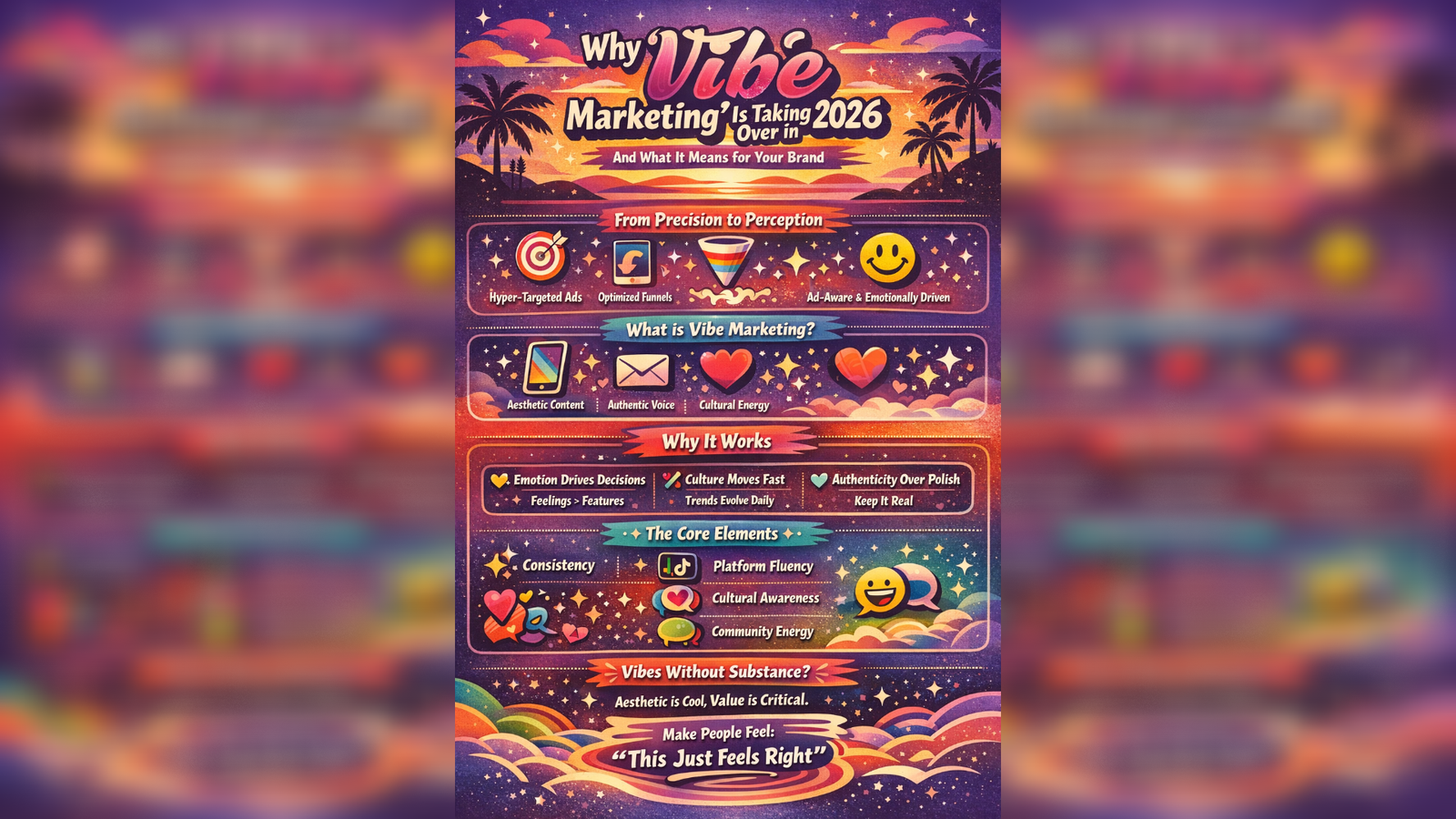
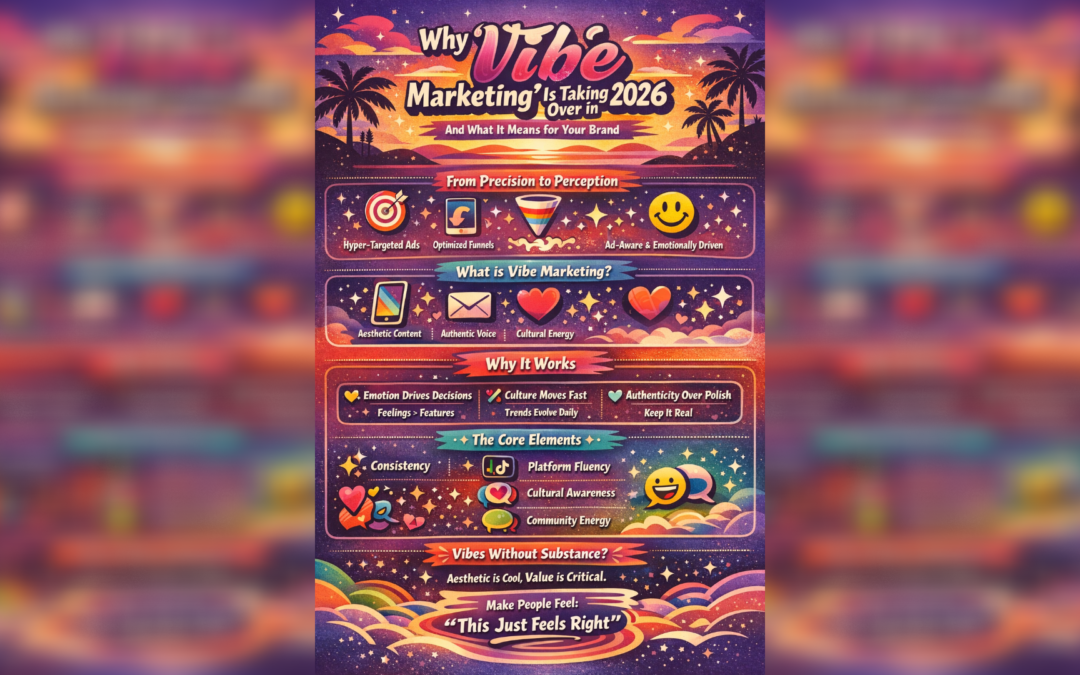
The Shift: From Precision to Perception
For more than a decade, marketing revolved around surgical accuracy:
- Micro-targeting
- Funnel engineering
- A/B testing everything
Those tools still matter—but they no longer differentiate you.
Today’s audiences, especially Gen Z and Gen Alpha, are:
- Hyper-aware of marketing tactics
- Fluent in algorithm behavior
- Motivated by emotional resonance
They don’t just want a product. They want a mirror—a brand that reflects their identity, values, humor, and worldview. If your brand doesn’t feel right, no amount of optimization can compensate.
So… What Is Vibe Marketing?
Vibe marketing is the intentional crafting of a brand’s emotional, aesthetic, and cultural presence.
It goes beyond:
- Logos
- Fonts
- Taglines
It’s the total sensory and emotional experience your brand creates across every touchpoint.
It’s:
- TikToks that blend into the feed instead of interrupting it
- Emails that read like a friend, not a corporation
- Websites that prioritize mood, flow, and personality over dense information
It’s less about campaigns and more about building a living, breathing aesthetic ecosystem.
Why Vibe Marketing Works in 2026
1. Emotion Is the Real Conversion Engine
People forget product specs but remember how you made them feel. A strong vibe creates instant recognition, trust, and loyalty.
2. Culture Moves Faster Than Strategy
Trends now shift in hours, not quarters. Brands that thrive are the ones that can participate in culture—not just analyze it.
3. Imperfection Feels Human
Overly polished content feels artificial. The new premium is authenticity: slightly messy, spontaneous, and real.
4. Algorithms Reward Relatability
Platforms increasingly prioritize content that feels native, not branded. Vibes outperform ads because they blend into the cultural stream.
The Core Elements of a High-Impact Brand Vibe
✦ Consistency Without Rigidity
Your brand should feel recognizable, but not predictable. Think “distinct personality,” not “scripted voice.”
✦ Platform-Native Expression
Each platform has its own language. Vibe marketing adapts the expression without losing the essence.
✦ Cultural Timing
Being early is powerful. Being late is embarrassing. Cultural fluency is now a competitive advantage.
✦ Community Co-Creation
Your audience isn’t passive—they’re collaborators. Comments, stitches, duets, remixes… your vibe becomes a shared space.
✦ Aesthetic Cohesion
Your visuals, tone, pacing, and energy should feel like they belong to the same universe—even when the content varies.
How to Start Building Your Brand Vibe
1. Define Your Emotional Core
Ask: What should people feel after interacting with us?
Not “informed”—but “energized,” “seen,” “inspired,” “amused.”
2. Audit Your Current Presence
Does your website feel like your TikTok?
Does your email tone match your social tone?
If not, you’ve got a vibe gap.
3. Loosen the Brand Guidelines
Rigid rules kill creativity. Give your team permission to experiment, adapt, and play.
4. Create for Insiders, Not Outsiders
Don’t translate content for platforms—speak the native language of each one.
5. Build a Cultural Radar
Track memes, micro-trends, aesthetics, and shifts in tone. Not to chase them—but to understand the environment you’re vibing in.
The Risk: Vibes Without Substance
Let’s be honest: vibes can get you attention, but they can’t fix a weak product.
A strong vibe can spark interest.
But only real value sustains loyalty.
Vibe marketing isn’t a shortcut—it’s an amplifier. If the foundation is shaky, the aesthetic won’t save you.
The Bottom Line
Marketing in 2026 isn’t just about visibility—it’s about emotional resonance.
The brands that win won’t be the ones with the biggest budgets or the most polished campaigns. They’ll be the ones that people encounter and instinctively think:
“This feels like me.”
In a world overflowing with content, that feeling isn’t just nice to have—it’s everything.