Driving traffic to your website is one of the most important goals for any online business, content creator, or digital marketer. However, not all website traffic delivers the same value. While some visitors may land on your site and quickly leave, high-quality traffic consists of users who are genuinely interested in your content, products, or services. These visitors are far more likely to engage with your brand, explore multiple pages, subscribe to your email list, or become paying customers.
In today’s competitive digital landscape, simply publishing content or launching a website is not enough to attract meaningful traffic. Search engines prioritize relevance, user experience, and authority, while audiences are constantly flooded with content from countless sources. To stand out, businesses must implement a strategic approach that combines search engine optimization, content marketing, social media promotion, partnerships, and ongoing optimization.
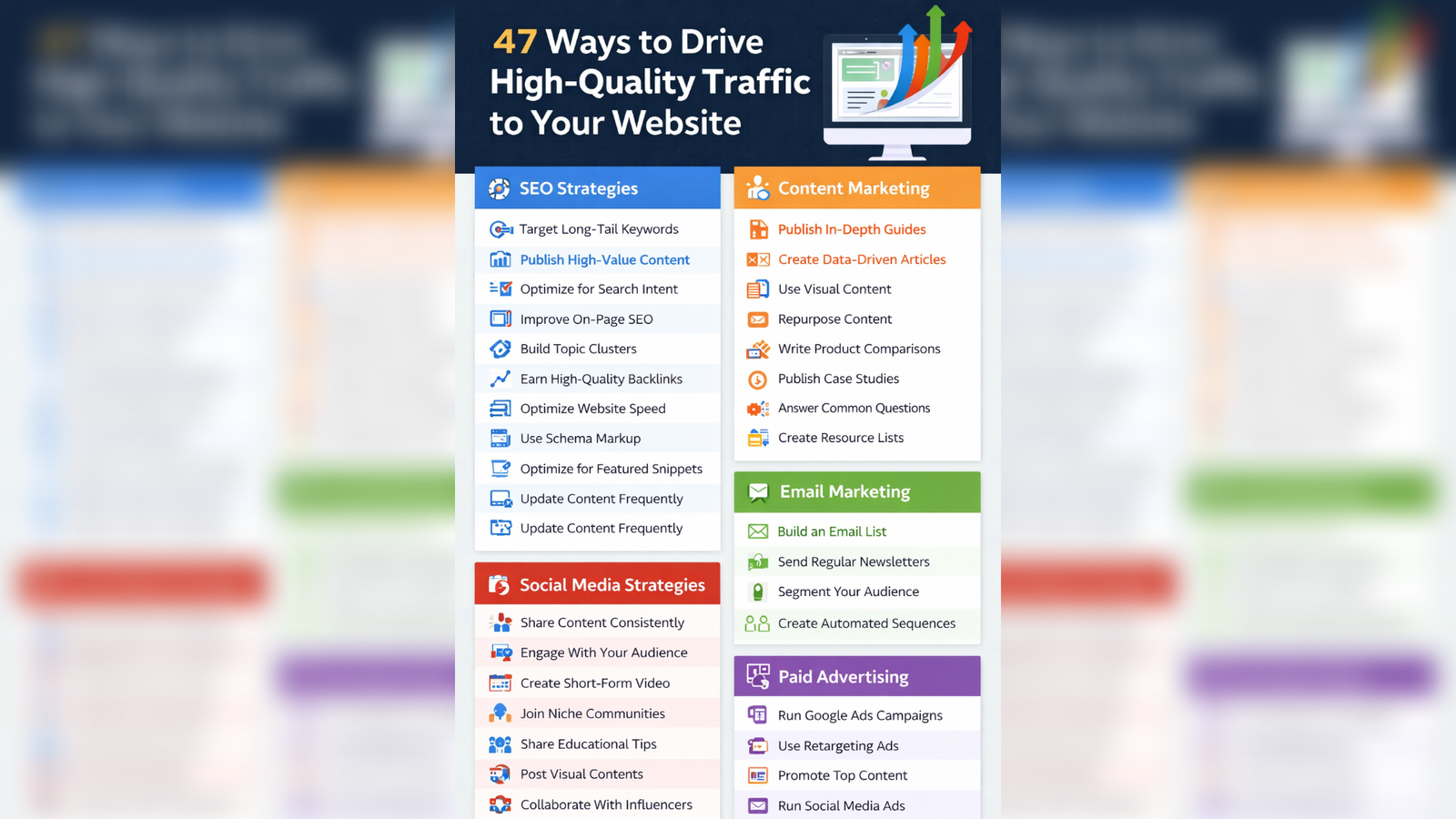
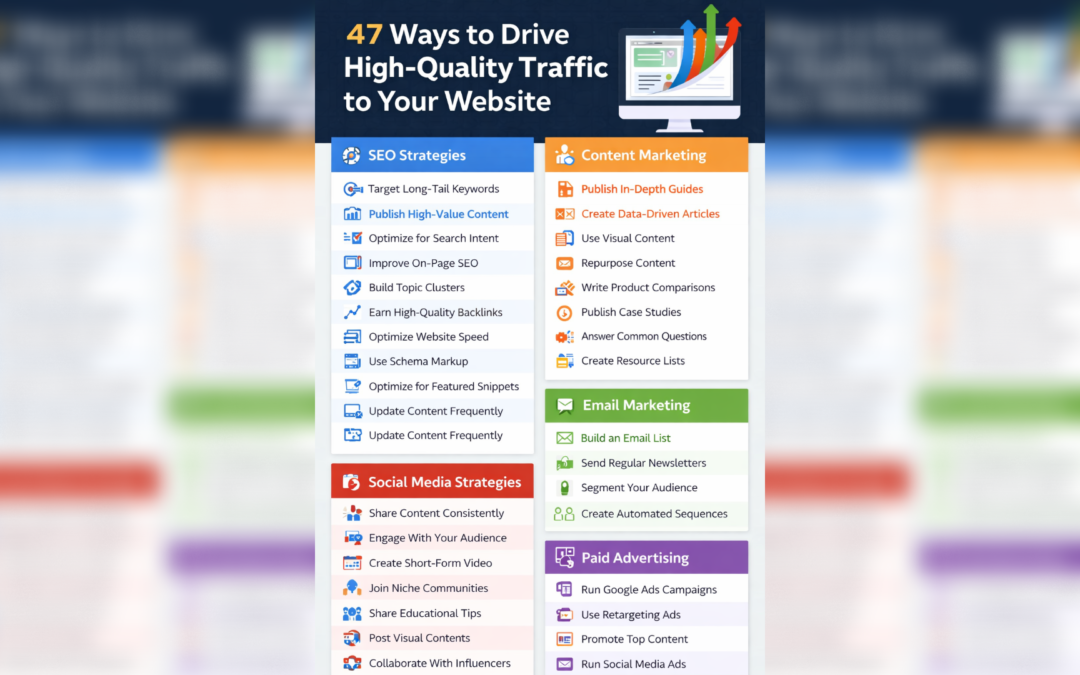
This comprehensive guide explores 47 powerful strategies to help you attract high-quality visitors to your website. Each tactic focuses not only on increasing traffic numbers but also on bringing in the right audience—people who are actively searching for the information, products, or solutions you provide.
By applying these strategies consistently, you can build a sustainable stream of targeted visitors and position your website as a trusted resource within your industry.
What Is High-Quality Website Traffic?
High-quality traffic refers to visitors who arrive at your website with genuine interest and clear intent. These users are more likely to engage with your content, stay on your site longer, and take meaningful actions such as subscribing, sharing, or purchasing.
Several factors determine the quality of website traffic. One of the most important is relevance. When your content closely matches what users are searching for, they are more likely to find value in your website and continue exploring.
Another important factor is user intent. Someone searching for “how to improve website SEO” has a very different goal than someone searching for “buy SEO services.” Understanding these differences helps you create content that matches user expectations.
Engagement metrics also reveal traffic quality. Visitors who spend time reading articles, clicking through pages, and interacting with your content indicate that your website is attracting the right audience.
Finally, conversion potential is a key indicator. High-quality visitors are much more likely to become subscribers, leads, or customers.
The goal of your traffic strategy should therefore be to attract visitors who align with your content and business objectives.
Why High-Quality Traffic Matters
Many website owners become focused on increasing raw traffic numbers, but traffic volume alone does not guarantee success. A website receiving thousands of untargeted visitors may still struggle to generate leads or sales.
High-quality traffic provides several important benefits.
First, it increases engagement. When visitors find exactly what they are looking for, they are more likely to read your content, explore additional pages, and interact with your brand.
Second, it improves conversion rates. Visitors who already have interest in your topic or solution are much more likely to subscribe to your email list or purchase your products.
Third, it strengthens search engine rankings. Search engines analyze user behavior signals such as time on page, bounce rate, and engagement. When visitors stay longer and interact with your content, search engines interpret this as a sign of quality.
Finally, high-quality traffic builds long-term brand authority. When people repeatedly find helpful information on your website, they begin to trust your expertise.
For these reasons, focusing on attracting the right audience is far more valuable than simply increasing visitor numbers.
SEO Strategies to Drive High-Quality Traffic
Search engine optimization remains one of the most powerful ways to generate targeted traffic. People who discover your website through search engines are often actively looking for solutions, which makes them highly valuable visitors.
1. Target Long-Tail Keywords
Long-tail keywords are longer, more specific search phrases that usually have lower competition. These keywords often attract visitors who are closer to making decisions because they have a clear idea of what they want.
For example, someone searching for “marketing tips” may simply be exploring ideas, while someone searching for “digital marketing tips for small businesses” likely has a specific goal.
By targeting these more detailed phrases, you can attract visitors who are actively seeking your expertise.
2. Publish High-Value Blog Content
One of the most effective ways to attract organic traffic is by consistently publishing helpful blog content. Educational articles, tutorials, and expert insights provide value to readers while also increasing the number of pages search engines can index.
High-quality blog content positions your website as a trusted resource and encourages visitors to return for additional information.
3. Optimize for Search Intent
Search intent refers to the reason behind a user’s search query. Understanding this intent is essential for creating content that satisfies user expectations.
Some searches are informational, while others are navigational or transactional. Tailoring your content to match the intent behind each keyword significantly increases your chances of ranking well in search results.
4. Improve On-Page SEO
On-page SEO involves optimizing elements within your website to improve search visibility. These elements include title tags, meta descriptions, headings, keyword placement, and internal links.
Proper on-page optimization helps search engines understand your content while also improving readability for users.
5. Build Topic Clusters
Topic clusters organize related content around a central pillar page. The pillar page provides a comprehensive overview of a topic, while supporting articles explore specific subtopics in greater detail.
This structure helps search engines recognize your expertise and strengthens internal linking across your website.
6. Earn High-Quality Backlinks
Backlinks remain one of the most important ranking factors for search engines. When reputable websites link to your content, it signals that your information is trustworthy and valuable.
Focus on creating link-worthy content such as research studies, comprehensive guides, or unique insights that others want to reference.
7. Optimize Website Speed
Page speed plays a significant role in both user experience and search rankings. Visitors expect websites to load quickly, and slow pages often cause users to leave before engaging with the content.
Improving site speed can dramatically increase user satisfaction and reduce bounce rates.
8. Use Schema Markup
Schema markup provides additional context to search engines by using structured data. This can help your pages appear in enhanced search results such as rich snippets, which often attract higher click-through rates.
9. Optimize for Featured Snippets
Featured snippets appear at the top of search results and provide quick answers to user questions. Structuring your content with clear headings and concise explanations increases the chances of being selected for these positions.
10. Update and Refresh Existing Content
Older articles may lose relevance over time, especially as industries evolve. Updating outdated content with new statistics, improved formatting, and additional insights can significantly boost rankings and traffic.
Content Marketing Strategies
Content marketing focuses on creating valuable resources that attract and educate your audience. High-quality content naturally draws visitors who are interested in your topic.
11. Publish In-Depth Guides
Comprehensive guides often perform well in search engines because they cover topics thoroughly. These articles become valuable reference resources that readers bookmark and share.
12. Create Data-Driven Articles
Original research and data-driven content provide unique insights that other websites may reference and link to.
13. Use Visual Content
Visual elements such as charts, diagrams, and infographics help simplify complex information. They also increase the likelihood that readers will share your content on social media.
14. Repurpose Content
Repurposing allows you to extend the reach of your existing content. A single blog post can be transformed into a video, podcast episode, infographic, or social media series.
15. Write Product Comparison Articles
Comparison articles help readers evaluate different solutions. These posts often attract visitors who are already considering a purchase.
16. Publish Case Studies
Case studies demonstrate real-world results and provide evidence that your strategies or products work.
17. Answer Common Questions
Creating content that answers frequently asked questions helps attract visitors who are actively searching for solutions.
18. Create Resource Lists
Curated lists of tools, websites, or strategies provide practical value and often attract backlinks from other content creators.
Social Media Strategies
Social media platforms offer powerful opportunities to expand your reach and introduce your content to new audiences.
19. Share Content Consistently
Regular posting keeps your audience engaged and increases the likelihood that your content will appear in feeds.
20. Engage With Your Audience
Responding to comments and starting conversations helps build relationships with followers.
21. Create Short-Form Video
Short videos can quickly capture attention and drive traffic to your website.
22. Participate in Niche Communities
Industry groups and communities provide opportunities to share insights and connect with targeted audiences.
23. Share Educational Tips
Quick, helpful tips often perform well on social media and encourage users to learn more.
24. Use Visual Posts
Images and carousel posts tend to generate higher engagement than text-only updates.
25. Collaborate With Influencers
Influencers have built trust with their audiences, and partnerships can introduce your brand to new followers.
26. Run Social Media Contests
Contests and giveaways can generate excitement and attract visitors to your website.
Email Marketing Strategies
Email marketing remains one of the most effective channels for driving repeat website traffic.
27. Build an Email Subscriber List
Offering valuable lead magnets encourages visitors to subscribe.
28. Send Regular Newsletters
Newsletters keep subscribers informed about new content and updates.
29. Segment Your Audience
Segmented lists allow you to send personalized content to different groups.
30. Create Automated Email Sequences
Automated sequences nurture relationships with subscribers and guide them toward deeper engagement.
Paid Traffic Strategies
Paid advertising can help accelerate traffic growth and reach targeted audiences quickly.
31. Run Search Engine Ads
Search ads target users who are actively searching for specific solutions.
32. Use Retargeting Ads
Retargeting campaigns remind previous visitors about your website.
33. Promote High-Performing Content
Boosting popular articles can expand their reach.
34. Run Social Media Ads
Social platforms allow precise audience targeting based on interests and behavior.
35. Test Multiple Ad Variations
Testing different headlines and visuals helps identify the most effective campaigns.
Partnerships and Community Strategies
Collaborations can dramatically expand your reach.
36. Write Guest Blog Posts
Guest blogging introduces your expertise to new audiences.
37. Appear on Podcasts
Podcast interviews allow you to share insights and direct listeners to your website.
38. Host Webinars
Educational webinars attract highly engaged audiences.
39. Partner With Complementary Brands
Joint collaborations help both brands reach new markets.
40. Participate in Online Forums
Answering questions in communities can drive targeted visitors.
Authority and Brand Building
Building authority strengthens trust and attracts loyal audiences.
41. Develop a Personal Brand
People connect with individuals more than anonymous brands.
42. Publish Thought Leadership Articles
Industry insights position you as an expert.
43. Speak at Virtual Events
Online conferences expand visibility.
44. Create Free Tools
Useful tools attract backlinks and recurring traffic.
Optimization Strategies
Optimization ensures that your traffic produces meaningful results.
45. Optimize Landing Pages
Clear messaging and strong calls to action improve conversions.
46. Use Exit-Intent Popups
Exit-intent popups capture leads before visitors leave your website.
47. Analyze Website Analytics
Analyzing traffic data helps you identify which strategies are working best.
Conclusion
Driving high-quality traffic to your website requires a balanced combination of search engine optimization, content marketing, social media engagement, partnerships, and continuous improvement.
Rather than relying on a single strategy, successful websites implement multiple approaches that work together to attract targeted visitors and build long-term authority.
By consistently publishing valuable content, understanding your audience’s needs, and refining your marketing strategy based on data, you can create a sustainable flow of high-quality traffic that supports your business growth.
The key is consistency. Implement these strategies gradually, measure your results, and continue improving your approach. Over time, your website will become a trusted resource that attracts engaged visitors who are eager to learn from you and interact with your brand.