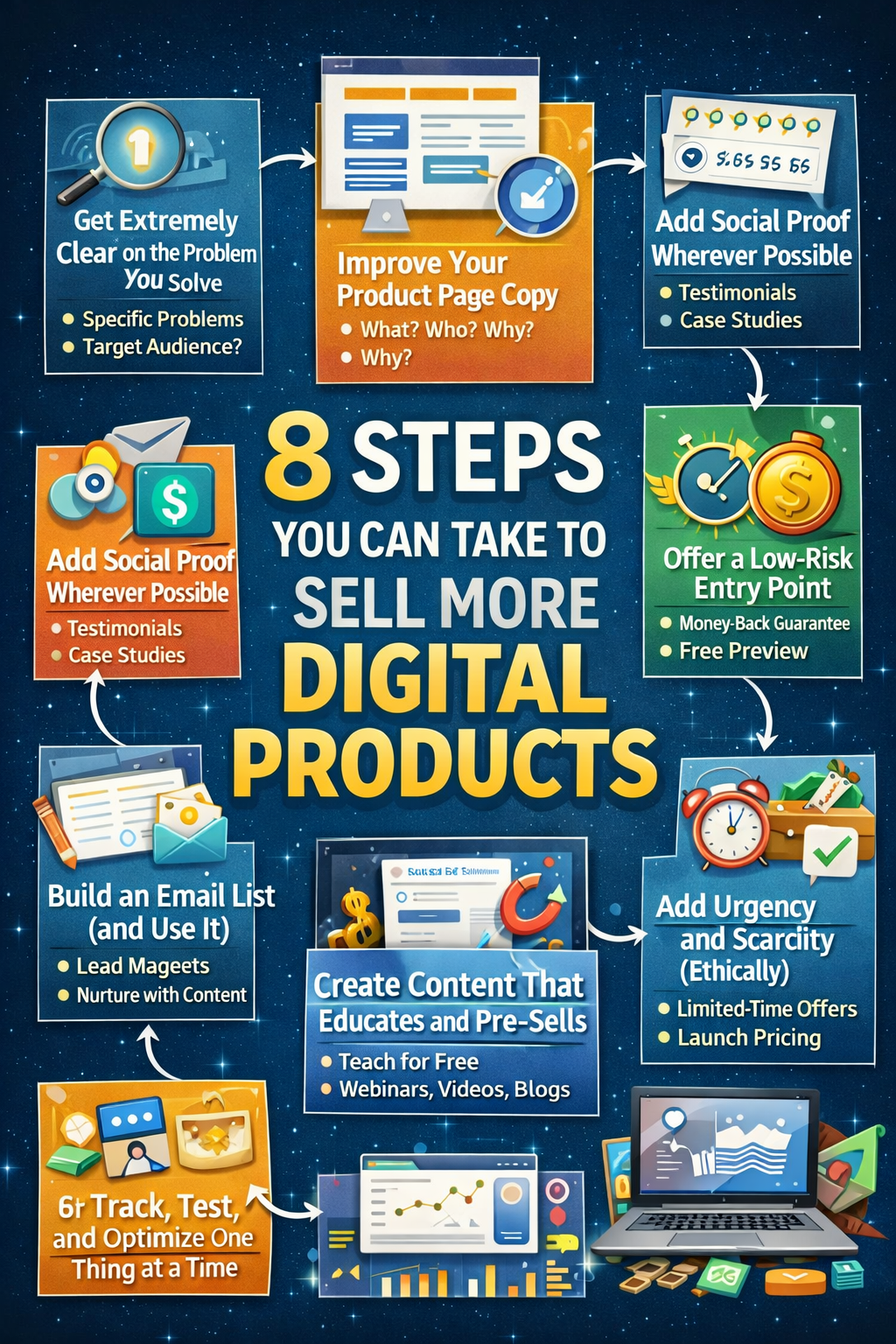

Selling digital products—like courses, templates, ebooks, software, or memberships—offers huge upside: low overhead, global reach, and scalable revenue. But competition is fierce, and simply having a great product isn’t enough.
To increase sales, you need clarity, trust, and smart distribution. Here are 8 practical steps you can take to sell more digital products consistently.
1. Get Extremely Clear on the Problem You Solve
People don’t buy digital products—they buy solutions.
Ask yourself:
- What exact problem does my product solve?
- Who is it specifically for?
- What outcome will they get?
The clearer your positioning, the easier it is for customers to say, “this is for me.”
2. Improve Your Product Page Copy
Your product page should answer three questions quickly:
- What is this?
- Who is it for?
- Why should I trust you?
Focus on benefits over features, use simple language, and include clear headlines, bullet points, screenshots or previews, and a strong call to action.
3. Add Social Proof Wherever Possible
Trust is a major buying factor for digital products.
Add testimonials, case studies, user results, and screenshots of feedback or reviews. Even a few honest testimonials can significantly boost conversions.
4. Offer a Low-Risk Entry Point
Reduce purchase anxiety by offering a money-back guarantee, a free preview or demo, or a low-cost starter version. When buyers feel safe, they’re far more likely to take action.
5. Build an Email List (and Use It)
Email remains one of the highest-converting sales channels.
Use lead magnets like free guides, checklists, mini-courses, or templates. Then nurture your list with helpful content before pitching your product. Warm audiences convert better than cold traffic.
6. Create Content That Educates and Pre-Sells
Use content to demonstrate your expertise and naturally lead to your product.
Effective formats include blog posts, YouTube videos, social media threads, and webinars or live sessions. Teach part of the solution for free, then position your product as the fastest or most complete path forward.
7. Add Urgency and Scarcity (Ethically)
People delay decisions unless there’s a reason to act now.
Examples include limited-time bonuses, launch-only pricing, enrollment deadlines, or seasonal promotions. Urgency should feel real, not manipulative.
8. Track, Test, and Optimize One Thing at a Time
Small improvements add up.
Track metrics like page conversion rates, email open and click rates, and traffic sources. Then test headlines, pricing, calls to action, and page layouts. Continuous optimization often beats constant product creation.
Final Thoughts
Selling more digital products isn’t about hype—it’s about clarity, trust, and consistency. When you clearly communicate value, reduce risk, and show real results, sales follow.
Focus on improving one step at a time, and your digital product revenue can grow steadily and sustainably.